Our mission
We’re committed to developing a diverse, workforce-ready talent pipeline to drive innovation and growth.
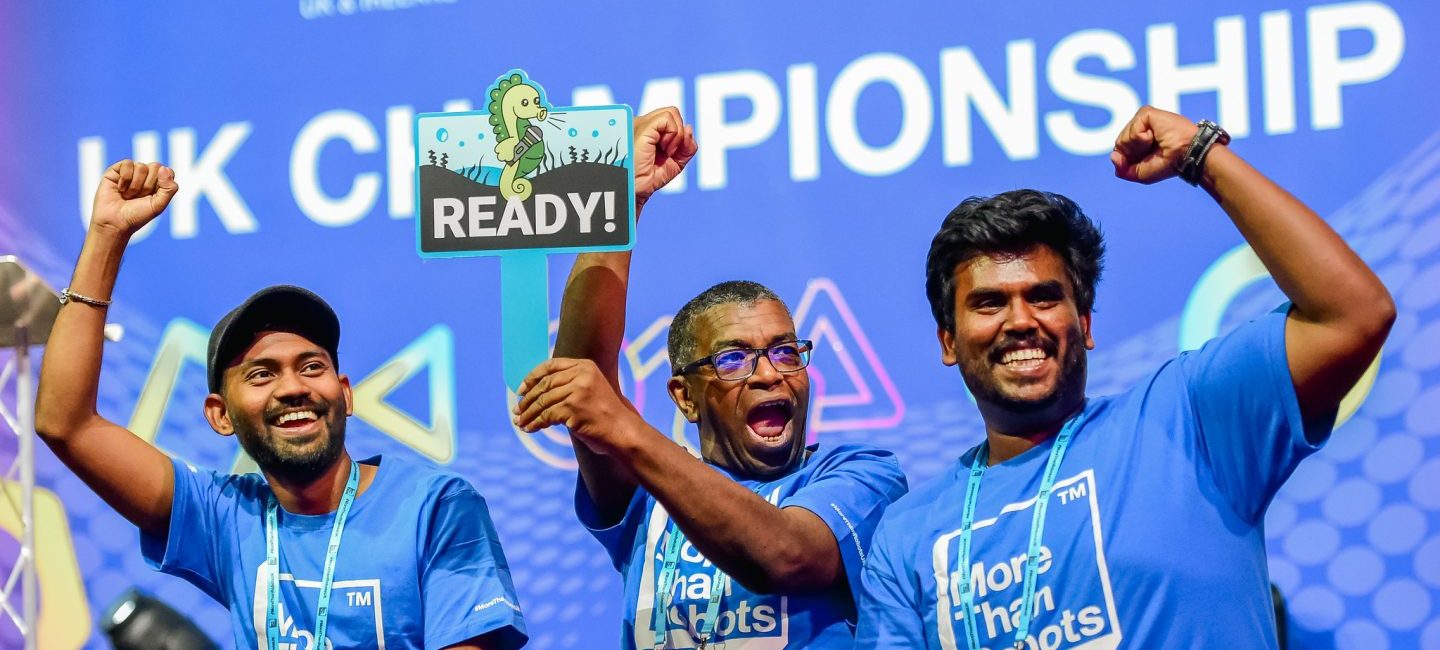
We’re committed to developing a diverse, workforce-ready talent pipeline to drive innovation and growth.
Automation, data, artificial intelligence and digital technology are driving change at an unprecedented rate. We’re not evolving how we educate young people at the same pace. As the STEM skills gap widens, we risk leaving young people unequipped to take on tomorrow’s challenges.
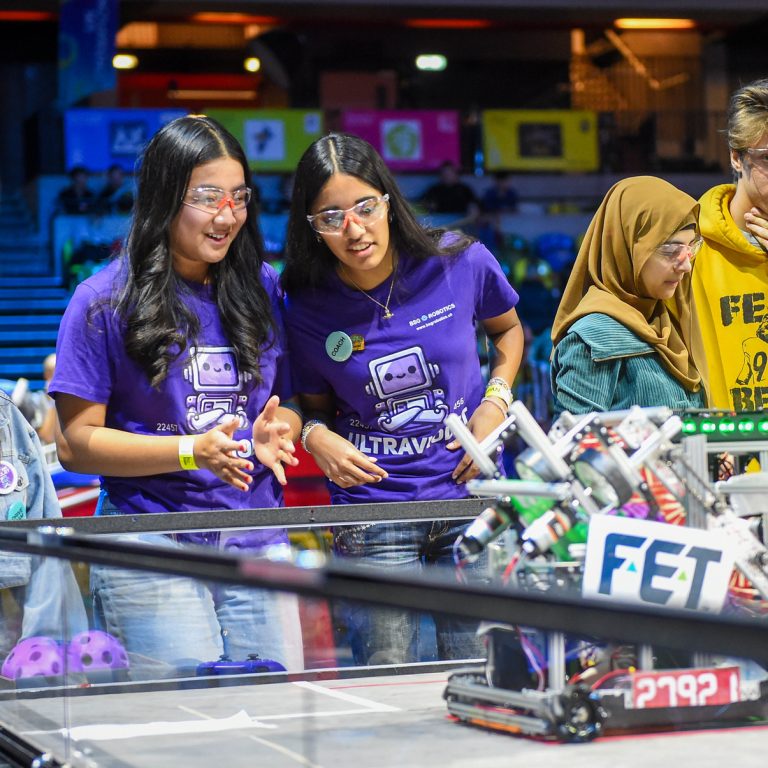
At FIRST® UK, we bridge the classroom with the workplace – using robots, competitions and industry role models as a vehicle for change.

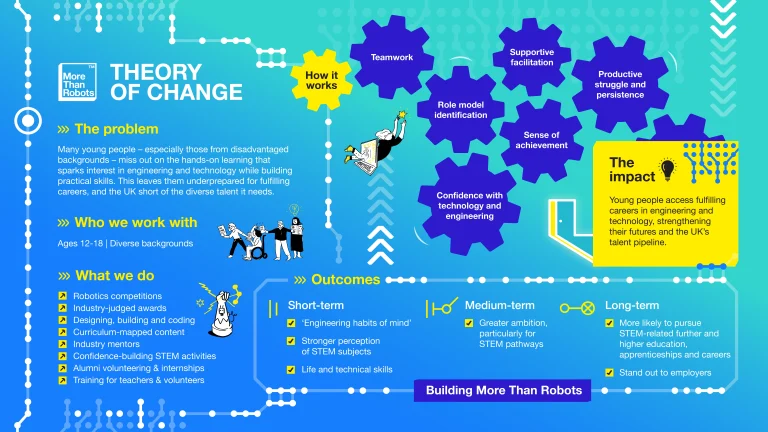
Through robotics, industry engagement and real-world problem-solving, FIRST® UK accelerates young people’s journeys into education, employment and STEM careers. Our Theory of Change sets out the pathway from participation to long-term impact.
To make STEM less intimidating, more diverse and inclusive, empowering young people to make informed choices about their future.
A world where young people are empowered to explore, challenge and grow into innovators, who will take on tomorrow’s challenges.
FIRST® UK sits at the intersection of five active government policy agendas, spanning four departments. Our programme is not an enrichment add-on. It simultaneously addresses skills, employability, industrial strategy, curriculum reform and online safety.
Robotics skills adoption & AI readiness
The UK’s future competitiveness depends on a workforce ready for robotics, AI and emerging technologies. We help young people build these skills through hands-on learning, an approach recognised through DSIT’s Robotics Skills competition.
Youth employability & NEET reduction
Over 1 million 16-24-year-olds are not in education, employment or training. We build the habits of mind, technical skills and industry interactions that help young people change that trajectory.
Industrial strategy & engineering talent pipeline
Advanced manufacturing, defence, clean energy and digital sectors all identify engineering skills pipelines as critical. We support young people to get there through relatable role models, skills building and industry connections. Our Chair of Trustees, Amelia Gould CEng FIET, sits on the Government’s Industrial Strategy Advisory Council.
Curriculum enrichment, teacher development & careers
The programme meets Gatsby Benchmarks 4, 5, 6 & 7 simultaneously and aligns directly to the DfE Enrichment Framework, supporting skills development beyond the classroom.
Online safety
With social media banned for under-16s from Spring 2027, the Government has committed to funding safe, purposeful offline spaces. Our programme is precisely that – structured, team-based, industry-connected, sustained. Not a club. Not a workshop. A six-month programme that transforms how young people see themselves.

Our values are more than words. They are what guide us as an organisation to achieve our mission.
Drive change, don’t wait for it
We step up and challenge what isn’t working, using our knowledge and network to achieve success.
Focus on outcomes
We follow an evidence-based pathway to impact that demonstrates transformative outcomes.
Collaborate with pioneers
We work with innovative organisations in STEM who want to empower a generation to realise their potential.
Learn, adapt, repeat
We continually learn from our experiences and others to develop interventions which meet the needs of the young people we serve.
Deliver efficiently
We operate in an agile and effective way, trusting in those we work with, to achieve impact at pace.
Champion Gracious Professionalism
We lead as positive examples to the rest of the community.
“Out-of-school programmes are a really important part of the ecosystem for supporting young people. They offer a chance for sustained engagement that isn’t a one-off session in a day, involving problem-solving, teamwork and other skills, which are really valuable.
STEM is not just a destination but a really important and empowering vehicle that can really help young people and communities achieve their potential, in a more cohesive, productive and socially just society.”
Prof. Louise Archer, Karl Mannheim Chair of Sociology of Education, Institute of Education, UCL
 LinkedIn
 Instagram
 YouTube